



Websites are like children. The more involved you are – the better they do. It's that simple. Everyone starts out with good intentions, but somewhere along the way things may fall apart. Here's what you are doing wrong – and how to fix it.
My Top 10 Mistakes and Simple fixes...
1. Weird Design Approach: your website design should match your organizational vibe. Funeral homes probably don't need pop ups or parallax animations. If you offer data analysis to the shipping industry? You can probably skip the TikTok channel. Also, if your customers are likely to be out in the wilderness? Fast loading should be your priority – so ditch the slideshow.
 Fix: Research is your friend. Search for ((whatever-funeral homes)) websites and make a few notes. When tackling a new website, I always review a couple dozen websites to see what's up and to gather ideas. Don't follow trends, and you may just set a new one.
2. Abandonment: that four year old website? The thrill is gone. You left Twitter back when it was still Twitter, but that X feed is still on your home page. Why? The Internet, and your website, are built from code. Internet code is constantly changing. Your website code is frozen in time from the day it was installed – unless you actively update it.
Fix: As soon as you launch a new website, start a "change log" for the next one. Maybe you have drone video footage that you didn't have before – add it to the change log. Once you have half a dozen items in the change log, or 3-4 years have gone by? You'll need a full website refresh. Old code can't be patched forever.
3. Ponderous Content: it's tough to remember that your customers don't know as much about (insert product/service) as you do. So creating smart content requires balance. Is it too long? Is it too high level? Are you using the right kind of content display? For example, accordions should be used to speed through more questions with short answers – not hide long answers.
Fix: have an outsider look at your website and see if they can tell what the heck your are talking about within a couple of minutes. Do they know what you offer? What they should do? Do they know who you are – or where your company is located? This can be a sobering experience.
4. Endless Slides: everyone loves slideshows but 1-3 optimized images is the limit. Slideshows are the Titanic of web design – dragging your site to the bottom of the mobile sea. Since the dawn of the carousel, it's been a well-known fact that only 1% of humans ever see slide two.
Fix: Got a bunch of photos? Have everyone vote for their favorites and display the top three. Size them to fit, and optimize them. Refresh the picks as often as you like, but limit yourself to three in rotation. And if you don't know how to optimize? You need a webmaster.
5. Photo Dumps: every picture ever taken means something to the photographer – and no one else. That's why captions were invented. A hundred convention photos feels like "content." It's not. No website visitor has any context for these images and they provide zero SEO lift.
Fix: Train yourself to quickly review batch photos and videos and pick half a dozen favorites. Make notes for each: who is in the photo? When and where was it taken? They may work beautifully in an Instagram feed or TikTok but you'll get so much more out of these pictures if you publish one at a time over six months in a fun series with little quotes, stories, links, etc.
6. Buttons Everywhere: a professional, beautiful website should have "just enough" content on every page. That prominent "big red button" in the nav bar? Sure! A call to action at the very bottom of the page? Okay, if the page is longer... but half a dozen buttons scattered all over, "just in case they miss it?" No. Too many buttons. Now I have to decide which to click, and that means I have to read something, or think, and that's not happening...
Fix: With every redundant button you place, you lose half your audience. Business websites look disorganized. Nonprofit websites look desperate. SEO consultants are very big on a call-to-action, but it's wasted if I don't know who you are, what you do, or give a damn. Make me care, and I will find a way to engage. Make me care first and give me one, logically placed button that doesn't say "learn more" or "help us" and I'm there.
7. Pop ups: "A pop up! Just what I was looking for!" said no-one, ever. Often found in cahoots with too many buttons on the page, popups are annoying and sometimes make your website unnavigable on mobile because the "x" button is off the screen.
Fix: Unless you offer last-minute, heavily-discounted air fares, no one does anything because of a pop up. If you must? Limit yourself to one. And don't leave it running forever. You're last-minute offer obviously isn't if it's always there.
8. Social media: links to your social media accounts are great. Social sharing links in your blog posts are super. Embedded feeds hurt performance and slow your website to a crawl. Anytime you embed a "thing" that has photos, videos, maps, or sound – you also embed the half ton of platform assets required to make it display correctly, or worse, make your website vulnerable to hacking.
Fix: Embedding social media doesn't drive people to follow you, and it isn't content that helps your SEO. Unless your feed is updated multiple times a day and your service vital? Don't embed social media.
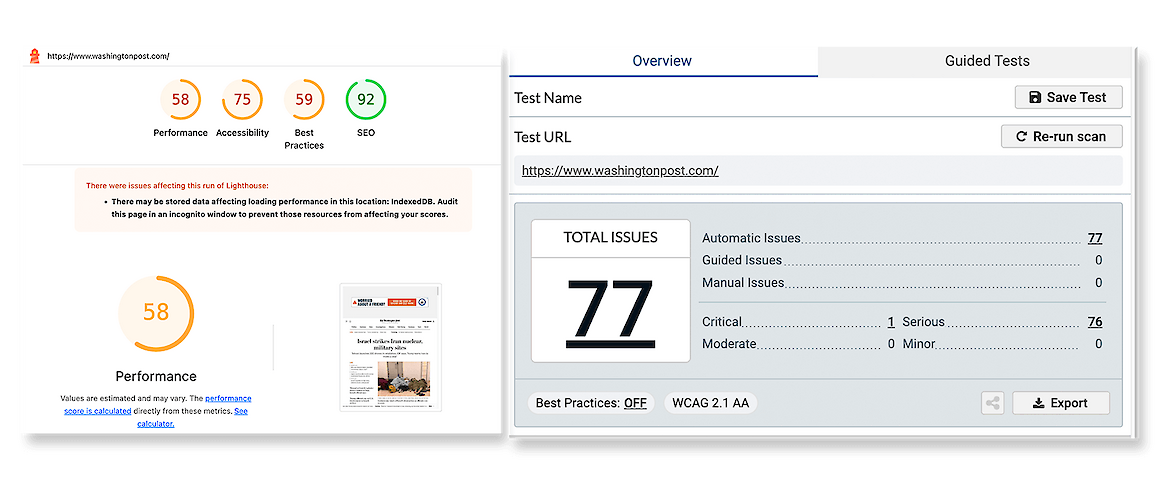
9. Coding for SEO only: the overwhelming majority of websites perform poorly for everything but SEO. Because code and accessibility guidelines are always changing, it's kind of a moving target, but online, we are all judged first by robots. Robots like good code. Here's today's Washington Post. In addition to over 300 cookies, there are at least 77 accessibility notes for the home page. The WaPo is a big name in the news industry so they probably don't care. Well, they care enough to code for SEO.
Here's my website this morning:
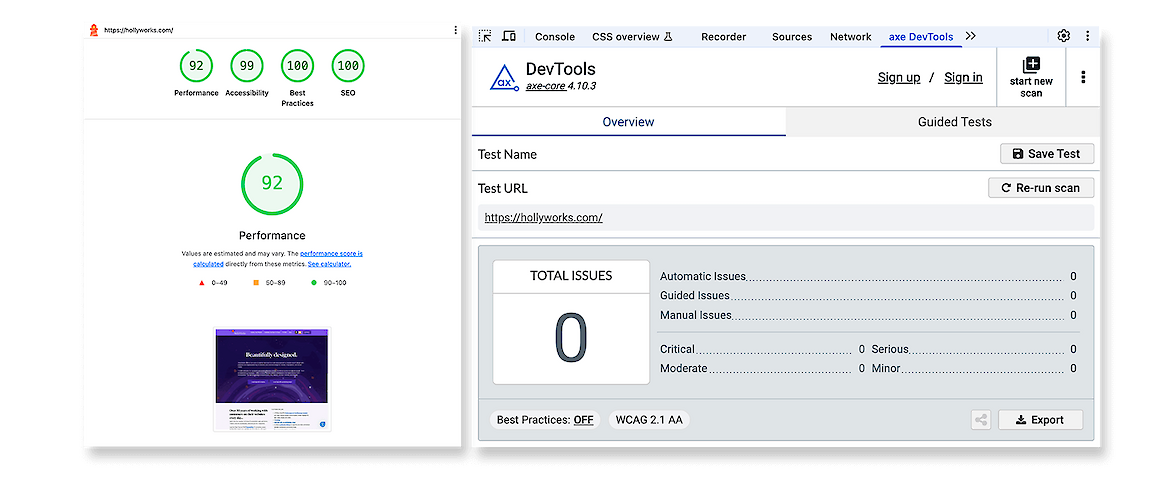
SEO, or search engine optimization, is just one metric of at least four. Marketing companies stress SEO because they don't know how to fix the other three metrics. Those that do know how, refer to it as "technical SEO."
Fix: All of my platforms are coded to this level of performance because I am both a real person, and a bit of a code nerd. Does it matter? It brings your content to the widest possible audience - everybody. To quote Harry Bosch, "everybody counts, or nobody counts." Creating accessible content requires skill and knowledge. For your business/organizational website you need a webmaster.
10. Automation: this has been on my list since the turn of the century. If you want people to engage with you and your website, you have to be engaged on your end. Streaming social media, randomizing images, AI generated anything: content, feeds, or pseudo-personalization, comments, and chat bots may look like fresh content, but they do not equal engagement – unless you can sell your product or service to AI customers.
In the average week, most of us get dozens of calls, texts, and emails that offer the kind of detailed, personal, folksy banter that screams NON HUMAN. I ignore all of these, so if your website is doing the same thing? I'm not going to be "impressed" ... I'm going to ignore that, too.
Statistics for "how much web content is AI generated" are all over the place but 70% seems a safe bet – and rising yearly. It could reach a tipping point where you will no longer have human visitors – or you may not be able to tell. At that point, the Internet will lose its value as a social platform. And that will make your website more important.
Fix: You can't expect real people to make an effort – if you don't. To quote Mission Impossible, "our lives are the sum of our choices..."